You need to test, we're here to help.

You need to test, we're here to help.

16 January 2014

Mr. Oscilloscope, Meet Mr. Computer

Figure 1: WaveStation software enables full remote control of an oscilloscope from a Windows PC
Figure 1: WaveStation software enables full remote
control of an oscilloscope from a Windows PC
Some things just seem made to go together, such as peanut butter and jelly, baseball and hot dogs, and Lennon and McCartney. But in the engineering world, one great combination is the oscilloscope and the PC. Both are wonderful tools but together they go places that neither can without the other.

08 January 2014

Let's Get Serial: About Manchester Data Encoding
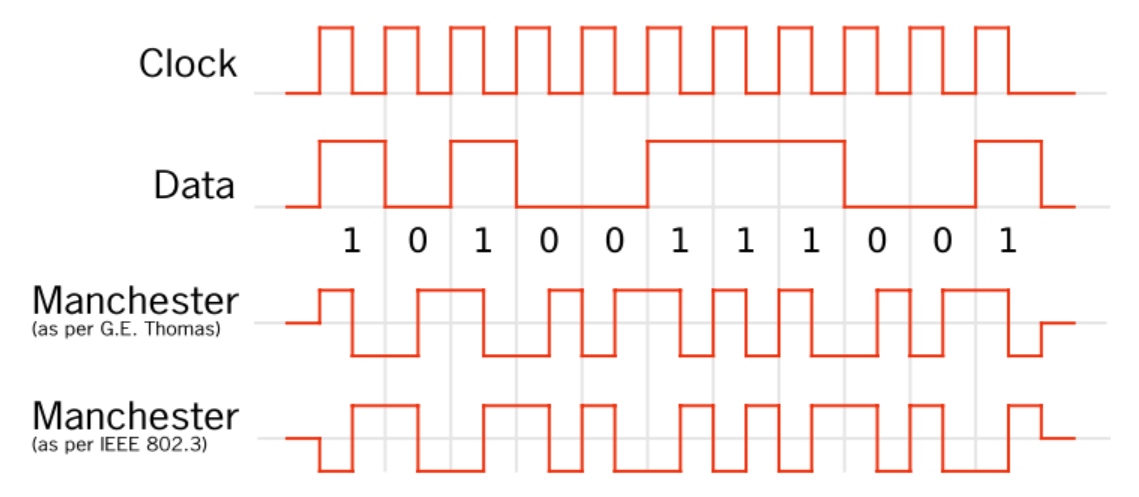
Manchester coding example
Figure 1: An example of Manchester coding
Founded by the Roman Empire in the first century AD, the city of Manchester, England is probably best associated today with the Manchester United Football Club of neighboring Old Trafford. But in serial-data circles, the city's name evokes Manchester line coding, or phase encoding.

23 December 2013

Back to Basics: Jitter

Jitter defined
Figure 1: Jitter is short-term variation
of a signal with respect to its
ideal position in time
Anyone working in applications that involve digital data, clocks, and serial data in general will eventually bump up against issues concerning jitter. Jitter is a subject of keen interest to every strata of the electronics industry. Chip makers, board integrators, system integrators, you name it: Everybody wants, and needs, to come to terms with jitter. It impacts reliability, manufacturability, and cost at all levels. And, of course, it's of keen interest to purveyors of test instruments, including us here at Teledyne LeCroy. In this first post of a projected series on jitter, we'll look at some of the tools built into modern digital oscilloscopes for jitter measurement and analysis.

18 December 2013

Oscilloscope Basics: Trigger Holdoff

As discussed in an earlier post, triggering is the means by which we can coax an oscilloscope into showing us what we're looking for in an input signal, and indeed even simply to display it in a stable fashion. Two of the most basic triggering types are edge triggers and pattern triggers. The latter applies to mixed-signal instruments, allowing users to trigger on a logical combination of analog and digital inputs.

12 December 2013

Back to Basics: Probes (Part IV)

An example of differential probes
Figure 1: An example of
differential probes
measuring from test
point to test point.
In three earlier posts on the basics of oscilloscope probes, we've taken a broad overview approach, looked more deeply at passive probes and inductance effects, and most recently, dug into active probes. Next up is differential probes, a different animal entirely from the foregoing types.

04 December 2013

Back to Basics: Probes (Part III)

Active oscilloscope probes
Figure 1: Active oscilloscope probes
sport high resistance and low
capacitance at their tips, but
terminate into a scope's 50Ω input.
In the first two installments of this series on probe basics, we examined some broad probe categories (Part I) and some of the issues that come with probe inductance (Part II). In the present installment, we'll delve a bit deeper into the topic of active probes. We'll also discuss when it's best to use passive probes and when to use active types.

27 November 2013

Video: Zooming In On Waveforms

Many modern oscilloscopes offer the ability to zoom in on select portions of a waveform trace, allowing users a much more detailed look at whatever anomalies may (or may not) be present. Zooming is a handy feature on any oscilloscope, but it's even handier if you happen to be using a Teledyne LeCroy HDO. These instruments bring 12 bits of vertical resolution to the table for even more detail and cleaner, crisper waveforms than any legacy 8-bit oscilloscope.

So, without further delay, here's a short tutorial video on how to implement zoom traces on an HDO.