You need to test, we're here to help.

You need to test, we're here to help.
Showing posts with label interconnects. Show all posts

14 March 2022

WavePulser 40iX vs. Time Domain Reflectomer (TDR) or Vector Network Analyzer (VNA)

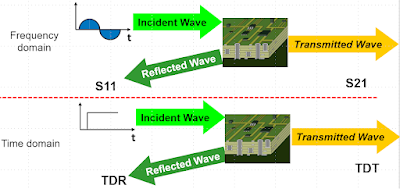
Figure 1: S-parameters and TDR responses are two means to the same end, characterizing interconnects.
Figure 1: S-parameters and TDR responses are two means to
the same end, characterizing interconnects.
Oscilloscopes are used to measure signals, usually as voltages vs. time, and signals come from active devices. But interconnects are passive structures that don’t produce their own signals. To characterize interconnects, you need a stimulus-response system.

There are two, principal types of stimulus-response systems used to characterize interconnects: Vector Network Analyzers (VNAs) used to measure S-parameters in the frequency domain, and Time Domain Reflectometers used to measure impulse responses in the time domain. Each uses a different type of incident signal and a different formalism, but as long as the interconnect is linear, passive and time invariant, both S-parameters and impulse responses yield the same information content in different formats and can be translated from one into another.

So, which do you need? We’ll look briefly at what each does and what are the criteria that might require you to have one versus the other.

30 August 2018

The Causes of Ground Bounce and How To Avoid It

This cross section of a 100-MHz microstrip transmission line shows us how a return path should look
Figure 1: This cross section of a 100-MHz microstrip
transmission line shows us how a return path should look
We've been discussing the topic of ground bounce on digital I/O lines as well as an effective way to diagnose and analyze it. We've also run through a detailed example of how to measure it using a quiet-low I/O driver as a sense line. Now, let's take a step back and examine the root causes of ground bounce, and also discuss some best design practices for avoiding it altogether.