You need to test, we're here to help.

You need to test, we're here to help.
Showing posts with label hold time. Show all posts

05 March 2015

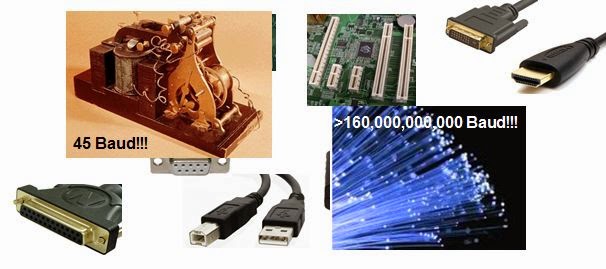
The History of Jitter

The story of jitter spans 45-baud telegraph machines to 160-Gbaud optical fiber
Figure 1: The story of jitter spans 45-baud telegraph
machines to 160-Gbaud optical fiber
Jitter is a signal-integrity gremlin that's been with us for a long time. In fact, it's been with us since before anyone really needed to care about it. But as time has worn on, our perception of jitter has certainly changed, and with it our approaches to diagnosing it, measuring it, and ultimately dispatching it. Here, we'll begin a traversal of the "jitter story," surveying where we've been, where we are, and where we may be going in our dealings with the phenomenon.

23 December 2013

Back to Basics: Jitter

Jitter defined
Figure 1: Jitter is short-term variation
of a signal with respect to its
ideal position in time
Anyone working in applications that involve digital data, clocks, and serial data in general will eventually bump up against issues concerning jitter. Jitter is a subject of keen interest to every strata of the electronics industry. Chip makers, board integrators, system integrators, you name it: Everybody wants, and needs, to come to terms with jitter. It impacts reliability, manufacturability, and cost at all levels. And, of course, it's of keen interest to purveyors of test instruments, including us here at Teledyne LeCroy. In this first post of a projected series on jitter, we'll look at some of the tools built into modern digital oscilloscopes for jitter measurement and analysis.